Narrow down the source
Compare which fixtures are affected, check for visible interior leaks, and note whether the change began suddenly or gradually.
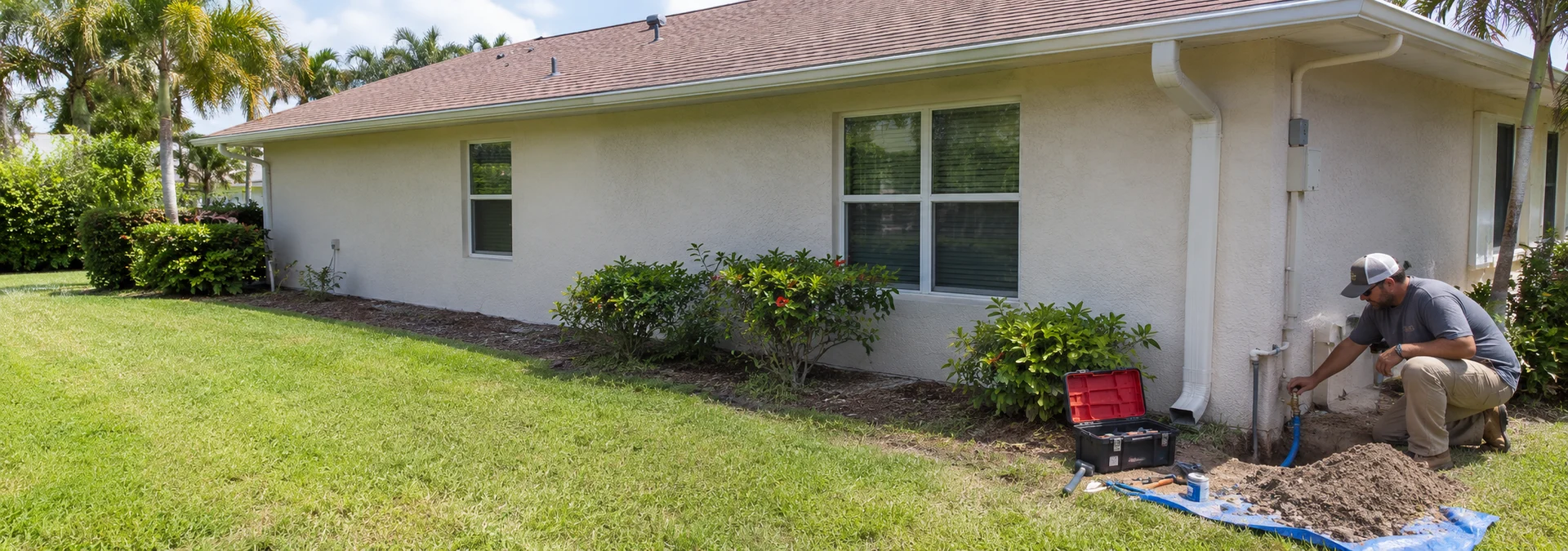
A water service line carries fresh water to a property, while a sewer lateral carries wastewater away. A damaged supply line can waste water, affect pressure, or leave a persistently wet area outdoors, but those symptoms can also come from fixtures, interior plumbing, irrigation, a pressure issue, or the public system. An evaluation should identify the source and confirm which portion of the line is involved before repair or replacement is planned.
Tell the provider whether pressure changed, your water use increased or the wet area appears only when irrigation runs. A sewer camera examines a drain; it is not a substitute for testing a pressurized water service.
The proposal should name the line being repaired, the connection points and the method of verification. Get driveway, irrigation and landscaping work into the same written scope if the route crosses them.
Wet ground alone cannot identify the source. A supply leak, sewer leak, irrigation fault or drainage problem can look similar. Meter checks, pipe locating and appropriate testing help separate them before a repair is chosen.
Water line repair addresses a leak, damaged connection, or failed section of the underground pipe that supplies a home with potable water. Replacement may make more sense when the line has widespread deterioration, repeated leaks, or a condition that cannot be corrected reliably with a focused repair. Testing and locating help distinguish a buried service-line issue from a fixture, interior plumbing, pressure-regulating valve, irrigation system, or utility-side problem.
The water service line is separate from the sewer lateral: one brings water into the property and the other carries wastewater away. For Fort Myers properties, pipe material, route, depth, access, ground conditions, local requirements, and the location of the meter or utility connection can affect the repair plan. Responsibility varies by service boundary, so confirm it with the water provider before work starts.
Compare which fixtures are affected, check for visible interior leaks, and note whether the change began suddenly or gradually.
Review accessible plumbing and meter information, then locate the buried route and coordinate with the water provider when the public connection or ownership boundary is unclear.
Use the confirmed leak location, pipe condition, material, access, and local requirements to compare a focused repair with replacing more of the service line.
Coordinate utility locating and required approvals, make the planned repair or replacement, and verify water service before restoring the work area.
A focused repair may fit when the leak is isolated and the rest of the accessible line is in suitable condition.
Replacement can be considered when multiple failures or the overall pipe condition make repeated spot repairs impractical.
A service-line assessment can help determine whether the cause is in the buried supply line, a valve or regulator, the building plumbing, or the utility system.
Persistent moisture may warrant checking the water service route, while also ruling out irrigation, runoff, groundwater, and sewer-line concerns.
The water service line brings potable water into a property. The sewer lateral carries wastewater away. A problem in one does not automatically mean the other is damaged.
It can, especially when pressure drops at multiple fixtures, but a closed valve, pressure regulator, interior plumbing issue, or utility-side interruption can cause similar symptoms. Testing is needed to identify the source.
Yes. A leak can increase water use even when it is underground and out of sight. Check for running fixtures and follow the water provider’s instructions for reading the meter; a meter that continues to register flow while water is off can help flag a leak.
A localized failure in an otherwise sound line may be repairable. Repeated leaks, widespread deterioration, or an unreliable pipe condition may make replacement the more practical option after inspection.
Responsibility depends on the local utility rules and the service boundary at the property. Ask the water provider to confirm which section it maintains before authorizing private work.
Sometimes. A trenchless method may be possible when the existing route, pipe condition, access points, soil, and local requirements allow it. The property and line must be evaluated first; trenchless replacement is not suitable for every job.
If water is actively entering the home and you can safely reach the building’s main shutoff, turning it off may limit damage. Do not operate a utility-owned meter or curb stop; contact the water provider if the leak appears to be on its side of the service.
No. Discoloration can have several causes, including work on the public system or corrosion in interior plumbing. If it appears suddenly or affects nearby properties, contact the water provider; have recurring issues assessed.
A supply-line evaluation should establish the suspected leak location and the boundary between utility and private responsibility. Pressure changes and meter observations are clues, not a confirmed excavation location.
Pipe length and material, burial depth, utility connections, access, and surface restoration affect the estimate. Ask which testing and reconnection work are included, and whether the scope is a repair or a full service-line replacement.
Sewer repair cost factors · Find your Fort Myers wastewater utility
Estimate requests are disabled in this private preview. See the estimate form.