Define the replacement limits
Locate the route, connections, failure points, and sound pipe that will remain. For replacement, compare the route, connection points, pipe material, backfill, and specific surface restoration listed in the estimate.
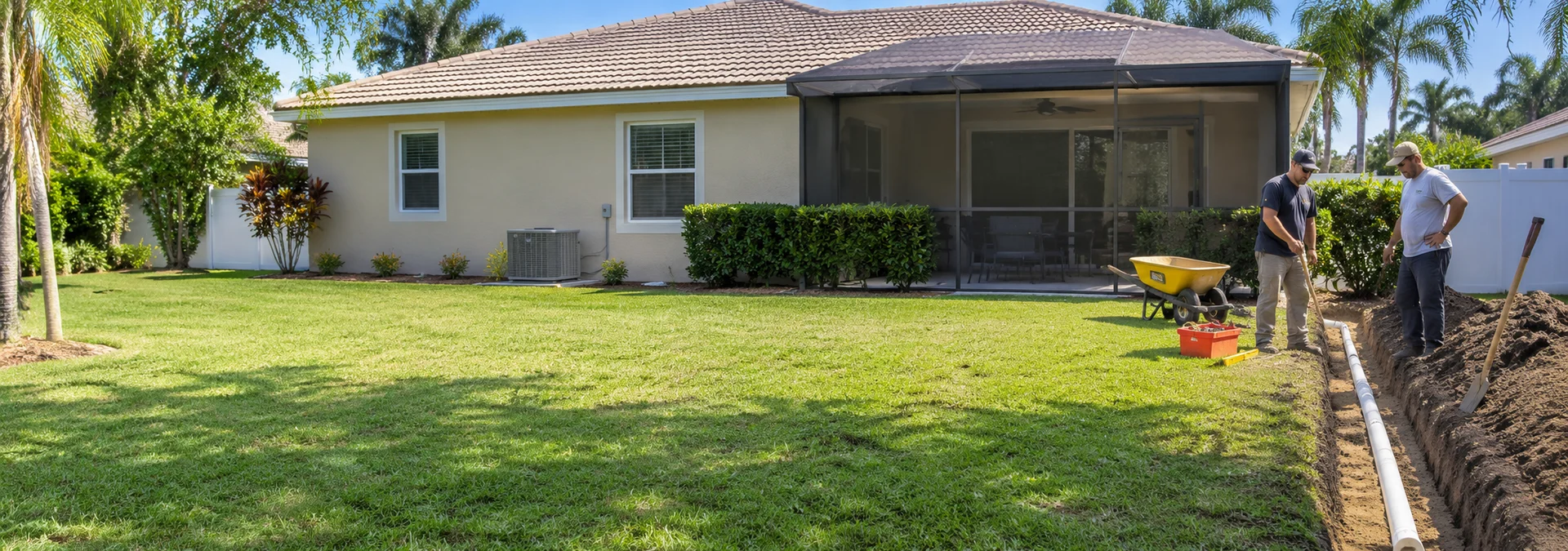
Replacement may be appropriate when the existing line cannot support a dependable repair. The work can involve a damaged section or a longer run depending on the pipe material, access, grade, and inspection results.
Ask where the new pipe starts and ends, which branch connections remain, and how the crew will check the finished slope. Replacing an outside lateral and replacing drains beneath a Florida slab are different projects.
Compare proposals using the same route and restoration scope. Paver removal, irrigation repairs, slab access and any work near the public connection should be listed before a crew opens the ground.
Replacement becomes a consideration when a pipe has collapsed, has extensive deterioration, or cannot maintain usable flow after appropriate cleaning. The inspection should identify which measured section needs replacement and explain why a smaller repair would not solve the problem.
Sewer line replacement removes or bypasses pipe that is collapsed, broadly deteriorated, repeatedly failing, poorly aligned, or otherwise unable to support a dependable repair. The scope may cover one long section or the full private lateral from the building to the connection point.
The method depends on the existing route, pipe material, depth, grade, utility crossings, access, and the surfaces above the line. Traditional trench replacement provides direct access. Pipe bursting may reuse a suitable route with entry and receiving pits. A clear estimate should state the limits of replacement, connection work, backfill, inspections, and surface restoration.
Locate the route, connections, failure points, and sound pipe that will remain. For replacement, compare the route, connection points, pipe material, backfill, and specific surface restoration listed in the estimate.
Compare open trench, pipe bursting, rerouting, and required access based on site conditions.
Set the new pipe at the planned grade and make approved building and downstream connections.
Complete required checks, backfill appropriately, and restore affected lawn, pavement, or interior surfaces.
Pipe that has lost its usable opening or cannot carry normal flow. These conditions can extend beyond a single repair point, so the full accessible route should be reviewed. Compare replacement methods against pipe condition, connections, access, and restoration.
Damage extends beyond one practical spot repair or lining area. These conditions can extend beyond a single repair point, so the full accessible route should be reviewed. Compare replacement methods against pipe condition, connections, access, and restoration.
Poor grade, significant offsets, or a route that requires correction. These conditions can extend beyond a single repair point, so the full accessible route should be reviewed. Compare replacement methods against pipe condition, connections, access, and restoration.
Replacement is generally considered when inspection shows collapse, severe or repeated failures, widespread deterioration, poor alignment, or conditions that make a durable repair unlikely.
No. Pipe bursting or a different route may reduce continuous trenching on suitable properties, although access pits and connection work are still required.
A useful scope identifies the pipe limits, method, material, connections, access, backfill, inspections, disposal, and which surfaces will or will not be restored.
Sometimes, but pipe sizing and connections must fit the building, route, local requirements, and downstream system. The provider should explain the proposed diameter.
Replace an old line by pulling new pipe through its underground path.
Explore →SERVICEDirect access for severe collapses, offsets, or conditions unsuitable for trenchless work.
Explore →SERVICESee the line from the inside and pinpoint roots, cracks, offsets, and sewer blockages.
Explore →Before replacing a lateral, establish which part of the run is failing and where the replacement will begin and end. The route, connections, grade, and public-system boundary shape the plan.
Replacement length, depth, connection work, installation method, permits, and restoration affect the total. Confirm whether the estimate reaches the agreed connection point and which surfaces will be restored.
Sewer repair cost factors · Find your Fort Myers wastewater utility
Estimate requests are disabled in this private preview. See the estimate form.