Locate and protect
Mark the sewer route, utilities, repair limits, equipment path, and work-zone protections.
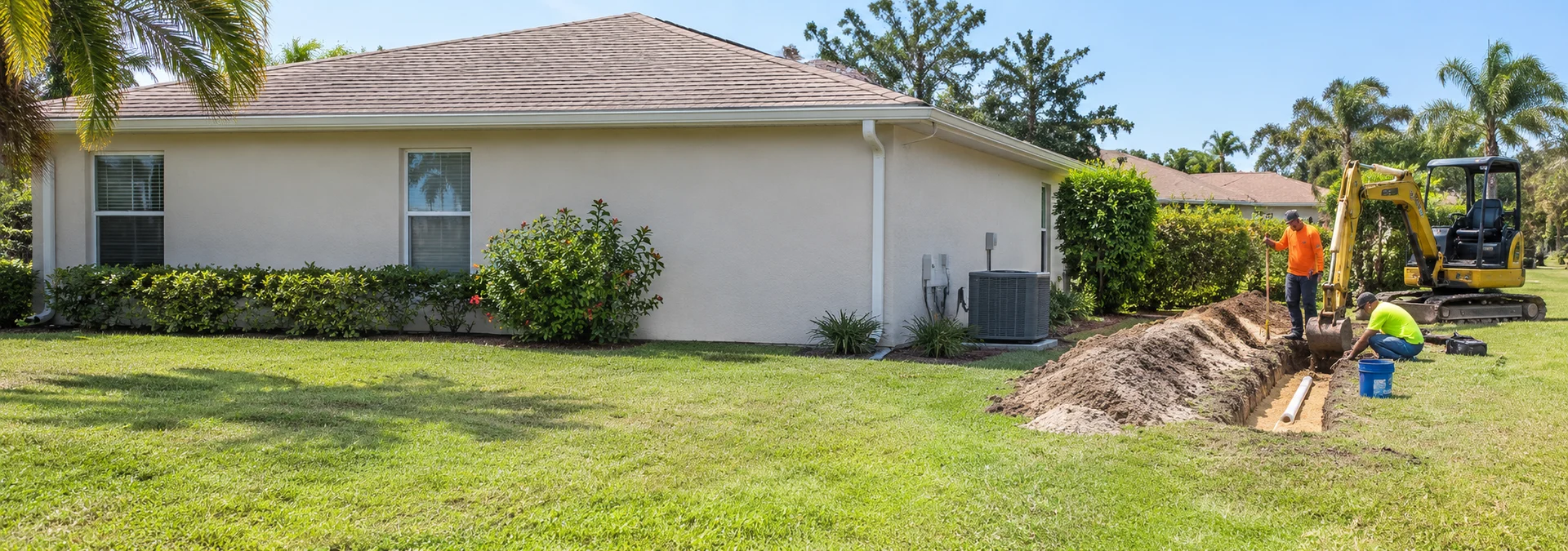
Traditional excavation remains an important option when a line is badly collapsed, sharply offset, inaccessible, or not a good candidate for trenchless repair. A clear scope helps limit digging to the area that actually needs work.
Walk the proposed route before work begins and point out irrigation, pool equipment lines and finished surfaces. Ask where equipment will travel and where excavated soil will be placed.
A complete proposal covers removal, bedding, reconnection, backfill and the agreed restoration. If groundwater is encountered, the contractor should explain how that condition changes the work and any price adjustment.
Excavation may be needed to replace a collapsed section, correct grade, rebuild a connection or reach pipe unsuitable for trenchless work. The opening should be planned around a located defect and a defined repair scope.
Traditional excavation opens the ground above the sewer so the crew can see, remove, realign, and replace damaged pipe directly. It remains the dependable option for complete collapse, major offsets, poor grade, inaccessible connections, unsuitable host pipe, or conditions that trenchless equipment cannot correct.
Good planning limits unnecessary disturbance. Camera locating, utility marking, access planning, soil and water conditions, shoring needs, equipment size, and the surface above the line all influence the excavation. The estimate should separate sewer work from landscaping, pavement, concrete, or interior restoration.
Mark the sewer route, utilities, repair limits, equipment path, and work-zone protections.
Open the required area using appropriate equipment, soil control, and trench-safety practices.
Remove the failed pipe, correct bedding or alignment, and install approved connections.
Complete required inspection, compact suitable backfill, and perform the agreed surface restoration.
Damage that prevents a camera, liner, or bursting equipment from passing. These conditions can extend beyond a single repair point, so the full accessible route should be reviewed. Compare replacement methods against pipe condition, connections, access, and restoration.
Bellies, sharp offsets, or routing problems that require direct repositioning. The service should match a confirmed condition rather than a symptom alone. Excavation gives direct access to the failed section and can be the practical choice when trenchless methods do not fit.
Branches, transitions, or structures that must be exposed to complete the work. The service should match a confirmed condition rather than a symptom alone. Review what the inspection shows about the surrounding pipe before deciding how much work is appropriate.
Excavation is often necessary for complete collapse, major offsets, grade correction, unsuitable host pipe, difficult connections, or routes that trenchless equipment cannot use safely.
That depends on the defect length, depth, equipment access, soil, utilities, and repair method. Accurate locating can help keep the opening focused on the required area.
It varies. The written scope should state whether backfill, seed, sod, landscaping, concrete, asphalt, or other finish work is included or excluded.
Heavy rain, water entering the excavation, utility locating, and access under paving can affect the schedule. Ask how water will be managed and when the area can be restored.
Full or partial replacement for collapsed, severely deteriorated, or repeatedly failing pipe.
Explore →SERVICENo-dig sewer repair and replacement options for suitable underground lines.
Explore →SERVICESee the line from the inside and pinpoint roots, cracks, offsets, and sewer blockages.
Explore →An excavation estimate needs the damaged section located at the surface, along with its depth and the utilities nearby. The repair plan should identify what must be opened to reach the pipe.
Trench depth and length, shoring requirements, pavement, utility crossings, and backfill can all affect the total. Compare excavation and pipe work separately from lawn, driveway, or sidewalk restoration.
Sewer repair cost factors · Find your Fort Myers wastewater utility
Estimate requests are disabled in this private preview. See the estimate form.